

Trimming your cat’s nails is an essential part of their grooming routine, helping to prevent overgrown claws, scratches on furniture, and potential injuries. However, many cat owners find this task daunting, as cats can be reluctant or even fearful of nail trims. With patience, positive reinforcement, and a step-by-step approach, you can train your cat to tolerate nail trims and make the experience stress-free for both of you. Here are some tips on how to train your cat for nail trims.
Understanding Your Cat’s Perspective
Before diving into training techniques, it’s important to understand why cats might resist nail trims. Cats are naturally protective of their paws, using them for climbing, hunting, and self-defence. Handling their paws can feel invasive or threatening. Additionally, negative past experiences with nail trims can make them wary. By creating a positive association with the process and respecting your cat’s boundaries, you can help them feel more comfortable.
Create a Calm Environment and Get Your Cat Used to Paw Handling
Choose a quiet, comfortable location where your cat feels safe. Minimize distractions such as loud noises, other pets, or sudden movements. A calm environment sets the tone for a positive experience. Start getting your cat exposed to getting their paws touched by gently touching their paws when they are relaxed, for example, during a cuddle session or when they’re lounging. Gradually increase the duration of paw handling over time. Depending on your cat’s comfort level, this step may take days or weeks. Patience is key.
Introduce the Nail Clippers and the Clipping Sounds and Motion
Show your cat the nail clippers without using them. Let them sniff and inspect the tool to reduce fear or curiosity. You can place the clippers near them while offering treats to create a positive association. If your cat seems uneasy, repeat this step several times until they’re comfortable around the clippers. In addition to clipper exposure, practice the motion of clipping without actually trimming their nails. Hold their paw, extend a claw, and gently tap the nail clippers near their nail. This helps your cat get used to the sensation and sound without the stress of an actual trim. Be sure to reward your cat after each session to reinforce calm behavior.
Go Slowly and at Your Cat’s Pace
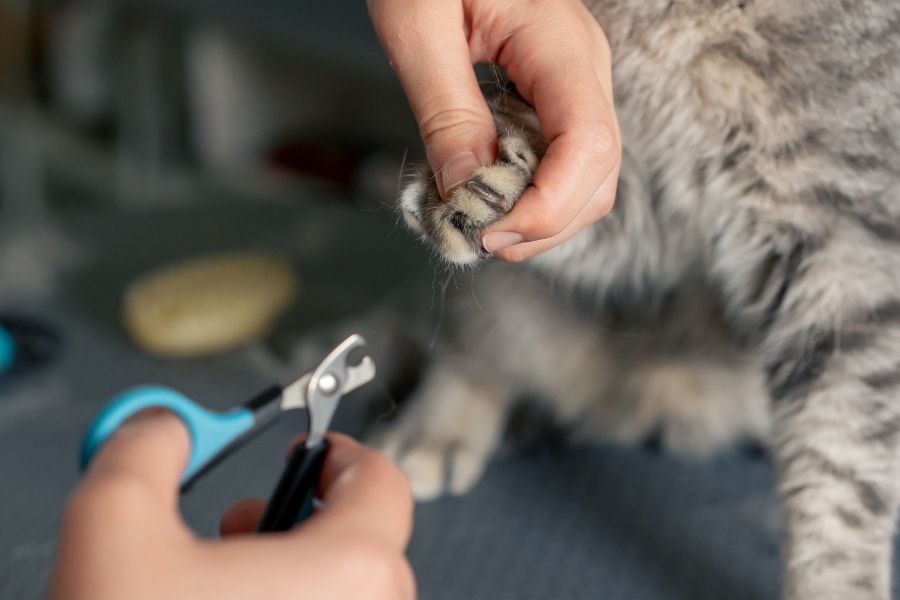
When your cat is comfortable handling the clippers, start by trimming just one or two nails. This minimizes stress and helps your cat gradually acclimate to the process. Be sure to hold their paw gently but firmly to avoid sudden movements. Clip only the sharp tip of the nail, avoiding the quick (the pink area inside the nail that contains nerves and blood vessels). Always praise and reward your cat immediately after each trimmed nail, and do not rush through the process. If your cat becomes agitated or tries to escape, take a break and try again later. Forcing the issue can create a negative experience and set back your progress. Over time, you can gradually increase the number of nails trimmed in one session. Some cats may tolerate having all their nails trimmed at once, while others may require multiple sessions.
Have Patience and Always Use Positive Reinforcement
Reward your cat throughout the training process to reinforce good behavior. Treats, praise, and even playtime can make nail trims a more enjoyable experience for your cat. Avoid using punishment or force, as this can increase fear and resistance. Instead, focus on building trust and creating a positive association with nail trims.
Additional Tips for Success
Be sure to have the right tools. Use nail clippers specifically designed for cats or a small, sharp pair of scissors-style clippers. A nail grinder can also be an alternative for cats that tolerate the sound and vibration. Only attempt nail trims when your cat is calm, such as after a meal or play session. Avoid trimming when they are hyperactive or stressed. Keep nail trim sessions short and take breaks when your cat gets restless. If your cat is particularly wiggly, enlist the help of a second person to hold and comfort your cat while you trim gently.
Additionally, consider having a towel to restrain your cat in case they are prone to biting. Lastly, accidents can happen, so if you accidentally cut into the quick, remain calm. Apply styptic powder or cornstarch to stop the bleeding and soothe your cat. Take a break and reassure them before attempting again.
Knowing How to Train Your Cat for Nail Trims takes Time and Patience
Training your cat for nail trims requires time, patience, and a lot of positive reinforcement. You can make nail trimming a stress-free routine by breaking the process into manageable steps and working at your cat’s pace. Remember, every cat is different, and what works for one may not work for another. Be patient and celebrate small victories along the way. If you’re struggling or feel unsure, don’t hesitate to consult a veterinarian or professional groomer for assistance. With persistence and care, you can keep your cat’s nails healthy while strengthening the bond you share. For all your professional pet care needs, call Luv My Sitter!


